The Fusion of AI & XR — Part 4: Digital Twins for Enterprises!
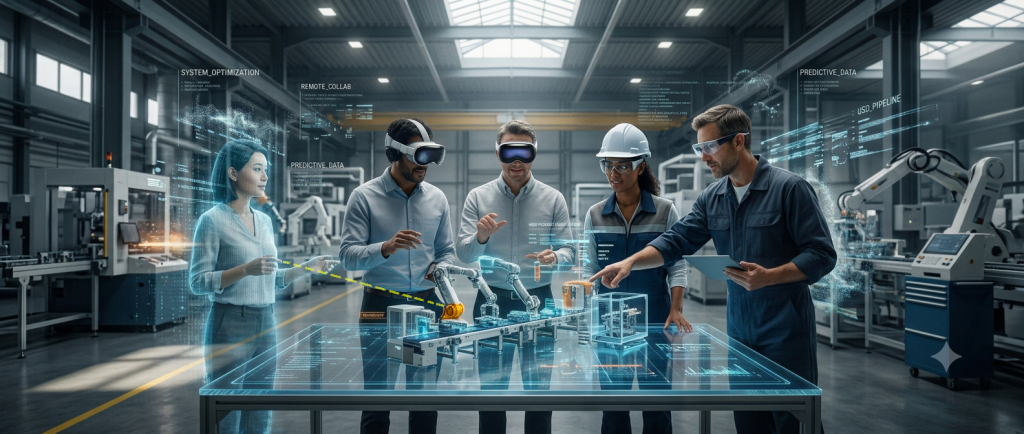
In my recent deep dive into the fusion of AI and XR, I explored the concept of Reality as a Multi-Layered Canvas. We looked at how spatial intelligence and Multimodal LLMs act as a dynamic “Reality Engine,” filtering and skinning our physical environment in real time. But when we pivot from consumer experiences to enterprise, heavy operations, and facility management, this canvas shifts from an informational overlay to a highly critical, precise execution tool: the Next-Gen Digital Twin.
For years, digital twins were merely glorified 3D CAD viewer files — static, heavy, and isolated. Today, the fusion of AI and XR transforms them into living, breathing, and predictive operational environments.
When to Pull the Trigger on a Digital Twin
In factory operations and facility management, a digital twin isn’t just a “nice-to-have” dashboard, it’s an operational imperative. You should actively deploy a digital twin when:
- The Cost of Physical Downtime is Prohibitive: If testing a new assembly line architecture layout means halting a multi-million dollar factory floor, you simulate first.
- Knowledge Transfer is Bottlenecked: When your senior field technicians are scarce, and you need to scale their expertise to junior operators globally without paying for flights.
- Complex Physics Dictate Success: When operations rely on predictive aerodynamics, stress-testing, or real-world robotics collision data before deployment.
The Stack: From Light Interaction to Heavy Physics
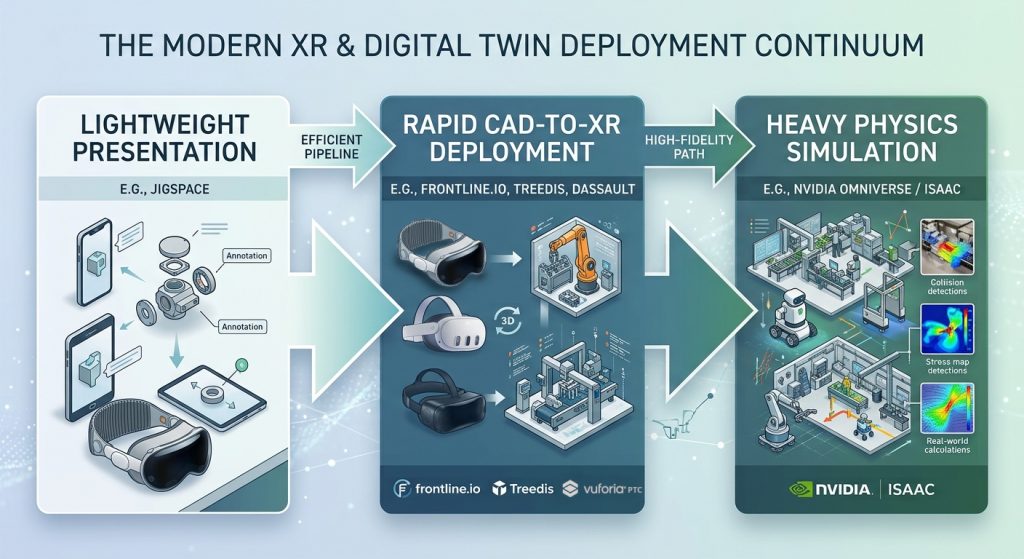
The enterprise XR ecosystem has matured into a powerful spectrum of tools tailored to specific operational needs.
- Nvidia Omniverse & Isaac Lab forPhysics Simulation:
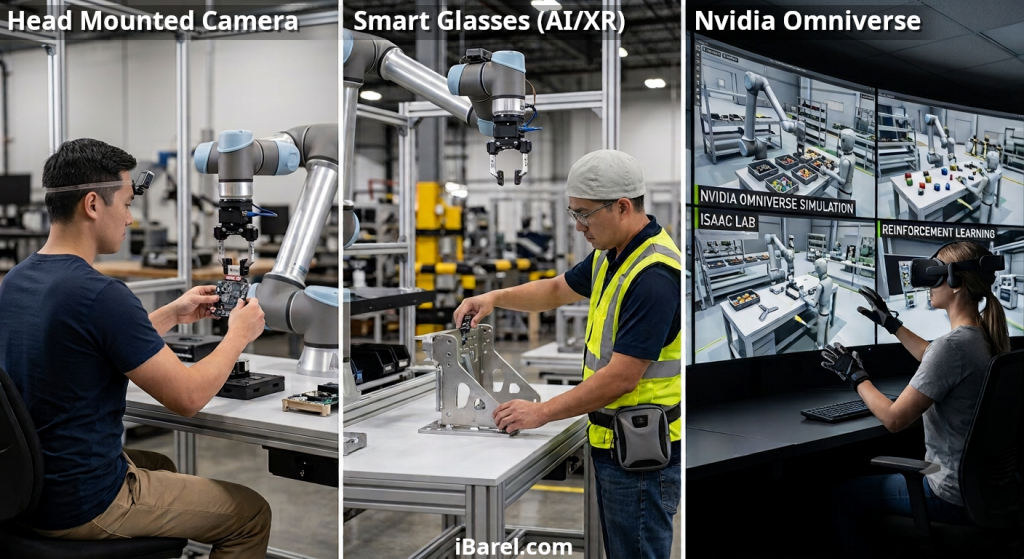
When simulation requires absolute physical truth, Nvidia’s ecosystem takes over. Omniverse serves as the real-time OpenUSD collaboration hub, while Isaac Lab injects photorealistic, physically accurate environments to train AI models, validate warehouse robotics, and simulate factory stresses before a single piece of hardware is ordered.
- JigSpace — Agile Spatial Presentations & Collaboration:
When you need immediate spatial communication, JigSpace allows teams to quickly explode 3D CAD assemblies and share interactive operational concepts. When paired with AR headsets like the Apple Vision Pro, JigSpace transcends standard viewing. Utilizing Apple’s Spatial Personas, remote field technicians, engineers, and clients can gather around a lifelike 3D “Jig” as high-fidelity avatars. They can look each other in the eye, read facial expressions, and cooperatively manipulate complex machine parts in a shared environment as if they were standing at the same workbench.
- Rapid Industrial Deployment (Frontline.io, Treedis, etc):
The Israeli ecosystem is hitting hard here. Platforms like frontline.io and Treedis are changing the game by letting teams drop complex CAD files into a pipeline and generate AI-powered, lightweight, interactive industrial digital twins in minutes. Combined with enterprise staples like Dassault Systèmes, companies can instantly map engineering-grade data layers across AR, VR, and mobile devices.
- The Enterprise Scale Counterweight (PTC & Vuforia):
While agile platforms excel at rapid, lightweight democratization, industrial heavyweights like PTC offer a different path via their Vuforia enterprise AR suite. Deeply embedded within traditional Product Lifecycle Management (PLM) and Internet of Things (IoT) data pipelines, PTC binds digital twin data directly onto legacy factory floors. It is a game of end-to-end infrastructure scale — connecting asset health and live operational metrics directly to the technician’s view.
Fusing Real with Synthetic: Gaussian Splatting!
One of the most profound evolutions in this space is how we capture the ground truth of the factory floor itself. Traditional 3D environment modeling is slow, rigid, and resource-heavy. Enter Gaussian Splatting — the AI-driven radiance field technique that lets us turn a quick video scan of a physical space into a photorealistic, spatially accurate 3D environment in minutes.
By fusing Gaussian Splats of actual, messy, real-world factory environments with engineered CAD digital twins, we unlock a hybrid reality:
- True-to-Life Context: You get the absolute visual accuracy of the current factory floor state (complete with the exact positioning of structural columns, legacy machinery, and conduit routing) without manually modeling it.
- Frictionless Spatial Auditing: Instead of checking an idealized, outdated blueprint, you overlay a synthetic CAD model of a proposed new machine directly onto the real-world Gaussian scan. You instantly catch spatial clearance issues, pipeline misalignment, or ergonomic blind spots before anything ships.
Remote Co-Presence: The Spatial Collaboration Hub
The real magic happens when this hybrid AI-XR infrastructure hits high-fidelity spatial computing hardware. Imagine a remote, cross-functional architecture review: a product manager in Tel Aviv, a design lead in California, and a field technician on a factory floor in Germany, all sharing the same digital twin.
- Real-time Re-Architecting: Instead of looking at 2D blueprints, stakeholders can collaboratively swap components, alter spatial layouts, and instantly visualize how a factory floor reconfiguration impacts ergonomics and workflow within the scanned reality of the room.
- Harnessing Field-Tech Insights: Field technicians possess the ground-truth reality of how machines actually wear down. In a shared spatial twin environment, a technician can physically point out a high-friction manifold, overlay real-world service logs via the AI data layer, and guide the design engineers on exactly how to modify the next product iteration.
- Live Knowledge Sharing: Complex troubleshooting flows cease to be text manuals. They become spatial recordings — interactive walk-throughs where a junior operator can watch a spatial “ghost” of an expert execute a repair perfectly in 3D.
By fusing AI’s predictive analytics and instant data-layer generation with XR’s spatial collaborative power, enterprise operations are moving past simple monitoring. We are officially entering the era of frictionless, remote spatial co-presence — where the factory floor is wherever you happen to put on your headset.
To see exactly how these shared workspaces look with realistic presence, check out this quick demonstration of JigSpace Multiplayer Mode and Spatial Personas, which showcases remote technical training and collaboration in real time.
More tools and case-studies to check out:
Polycam – Build a Digital Twin from One Scan of your space (3D Model1, Floor Plan, Spatial Data) with AI.
Mercedes-Benz – Here’s how they use Nvidia Omniiverse to simulate their factories and ipmrove assembly lines.
BMW Group – Here’s how BMW uses Nvidia Omniverse to simulate and improve their factory and manufacturing.
Siemens – Industrial digitalization with NVIDIAO mniverse and AI integration across the Siemens Xcelerator portfolio.
Nvidia and Siemens – The Next Generation of Industrial Physical AI with Digital Twins and real-world simulations.
Foxconn’s Robotic Factories – Here’s how they use Nvidia Omniverse to build robotic factories (floor planning etc).
Nvidia – Fusing Real-Time AI With Digital Twins for industrial automation in factories and wearhouses.
Nvidia – Accelerating AI Data Center Design With Digital Twins and accurate simulations.
Previous articles in this series:
Part 1
Part 2
Part 3
#AI #XR #AR #SpatialComputing #AppleVisionPro #MetaQuest3 #GalaxyXR #AndroidXR #FutureTech #Startups #WebXR #DigitalTwins #Enterprise
Leave a Reply